
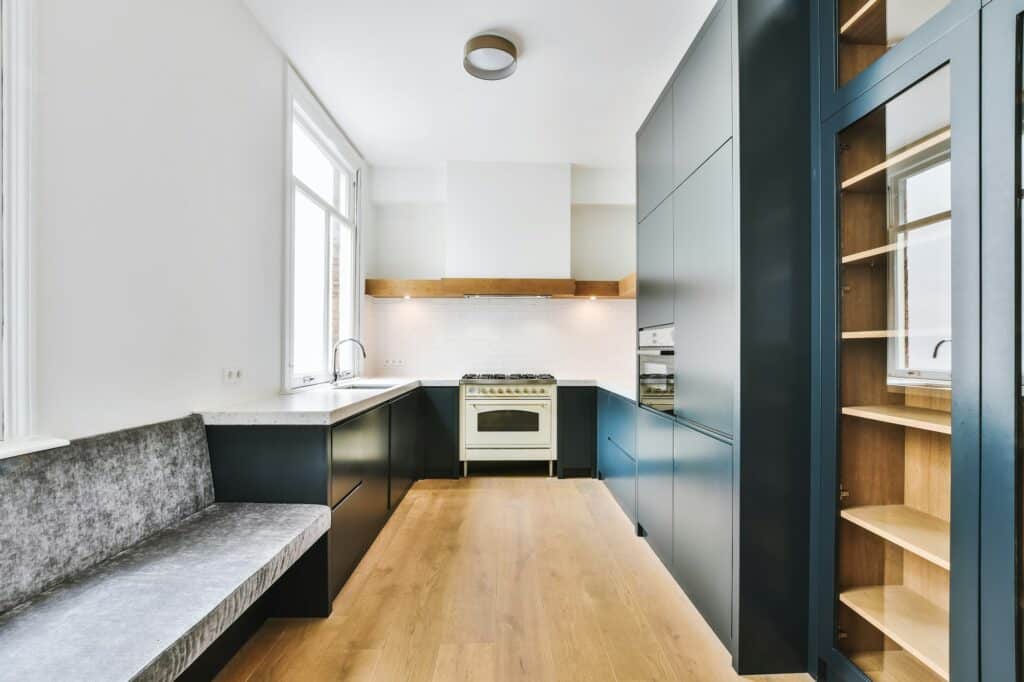
Small kitchens can be challenging to work with, but with the right design strategies, you can transform your compact space into a highly functional and stylish area. Whether you’re dealing with limited square footage or an awkward layout, there are plenty of ways to maximize your kitchen’s potential. Here, we’ll explore practical space-saving solutions and design tips that can help you make the most of your small kitchen.
1. Opt for Open Shelving to Create the Illusion of Space
Replacing bulky upper cabinets with open shelving can make your kitchen feel larger and airier. This design choice not only opens up the space but also gives you easy access to frequently used items, allowing for better organization and display of your most attractive dishware.
- How to Use It: Consider installing floating shelves in natural wood or sleek metal for a modern touch. Keep frequently used items on the lower shelves, while reserving higher shelves for decorative pieces. Open shelving can also help break up the visual monotony of cabinetry, giving your kitchen a lighter, more open feel.
- Pro Tip: Use matching containers and glass jars for a cohesive look that reduces visual clutter. Label jars to keep spices, grains, and dry goods organized and easily accessible.
- Bonus Idea: Install under-shelf lighting to highlight your open shelves and enhance the ambiance of your kitchen.
2. Utilize Vertical Space with Tall Cabinets
In a small kitchen, every inch counts. Make use of vertical space by installing tall cabinets that reach the ceiling. These cabinets offer additional storage without taking up valuable floor space, perfect for stowing away items you don’t use daily, such as specialty kitchen gadgets or seasonal dishware.
- How to Use It: Consider adding crown molding to tall cabinets to give them a finished, built-in look. Use adjustable shelves inside these cabinets to accommodate items of various sizes.
- Pro Tip: Store less frequently used items, like holiday serving platters, on higher shelves and keep everyday essentials within easy reach. Invest in a sturdy step stool to make accessing higher storage easier.
- Bonus Idea: Use the tops of cabinets to display decorative pieces or baskets to store less-used items while keeping them accessible.
3. Invest in Multi-Functional Furniture
Maximize functionality by incorporating multi-functional pieces, such as a kitchen island that doubles as a dining table or a pull-out countertop extension. Foldable or collapsible furniture can save space when not in use, making your kitchen more versatile for cooking, dining, or entertaining.
- How to Use It: Consider installing a drop-leaf table that can be folded down when not in use or a narrow, rolling kitchen island that can be tucked away or moved around as needed.
- Pro Tip: Choose a kitchen cart with wheels that has open shelving or built-in storage drawers. This can serve as extra prep space, a coffee station, or even a small bar cart for entertaining.
- Bonus Idea: Add a bench with hidden storage in your breakfast nook to double as a seating area and extra storage for linens or kitchen supplies.
4. Use Light Colors and Reflective Surfaces
Light, neutral colors can make a small kitchen feel more spacious by reflecting natural light. Opt for white or pastel cabinetry and consider using glossy finishes, glass, or mirrored backsplashes to bounce light around the room. This approach can brighten your kitchen and make it feel larger.
- How to Use It: Pair light-colored cabinets with a soft, neutral backsplash to keep the space feeling cohesive. Reflective surfaces like glossy tiles or stainless steel appliances can amplify the light, creating an open and airy atmosphere.
- Pro Tip: Add pops of color with accessories, like colorful dish towels, plants, or small appliances, to infuse personality into your kitchen without overwhelming the space.
- Bonus Idea: Install a large mirror on one wall to visually expand the room and make it feel twice as big.
5. Maximize Storage with Pull-Out Drawers and Cabinets
Traditional cabinets can waste a lot of space, especially in corners. Opt for pull-out drawers, lazy Susans, and corner pull-outs to efficiently use every inch. These solutions make accessing pots, pans, and utensils much easier, especially in hard-to-reach spots.
- How to Use It: Use deep pull-out drawers for storing heavy pots and pans, and install a pull-out spice rack next to your stove for easy access while cooking. Corner pull-outs are perfect for maximizing otherwise wasted corner space.
- Pro Tip: Install dividers in drawers to keep utensils, cutting boards, and baking sheets organized and easy to grab when needed.
- Bonus Idea: Consider installing a pull-out pantry for dry goods, which can fit into narrow spaces that would otherwise be unused.
6. Hang Pots, Pans, and Utensils
Free up cabinet space by hanging pots, pans, and utensils on a wall-mounted rack or a pegboard. This not only saves space but also adds a stylish, functional element to your kitchen design, giving it a professional, chef-inspired look.
- How to Use It: Install a rail with hooks above your stove or on a blank wall to hang your most-used utensils and pans. Pegboards are a versatile option that can be customized to hold everything from knives to cutting boards.
- Pro Tip: Use hooks on the inside of cabinet doors for hanging small items like measuring spoons, oven mitts, or cleaning brushes.
- Bonus Idea: Add a magnetic strip to hold knives securely while keeping them within reach.
7. Choose Slim Appliances
When every inch matters, consider investing in slim or compact appliances. Look for narrow dishwashers, under-counter refrigerators, and space-saving microwaves to optimize your kitchen layout without sacrificing functionality.
- How to Use It: Opt for built-in or under-counter appliances to save space and maintain a clean, seamless look. Consider a combination microwave and convection oven to free up counter space.
- Pro Tip: Built-in appliances can save space and give your kitchen a sleek, cohesive appearance while allowing for more counter space.
- Bonus Idea: Consider a single-basin sink to maximize counter space without compromising functionality.
8. Install a Rolling or Fold-Down Countertop
If counter space is limited, consider adding a rolling or fold-down countertop that you can tuck away when not in use. This is perfect for small kitchens that need extra prep space on demand without sacrificing floor space.
- How to Use It: Install a fold-down counter on an empty wall or a rolling cart that can serve as a prep station and be stowed away when not needed.
- Pro Tip: A fold-down table can also serve as a breakfast nook or a workspace for your laptop.
- Bonus Idea: Add a pull-out cutting board for additional prep space without sacrificing storage.
9. Use Lighting to Enhance the Space
Proper lighting can make a small kitchen appear larger and more inviting. Combine task lighting under cabinets, ambient lighting for the entire space, and accent lighting for specific features like a backsplash or open shelves.
- How to Use It: Install recessed lighting to brighten the entire kitchen, while pendant lights over the island or dining area can create a cozy atmosphere.
- Pro Tip: Opt for LED strips under cabinets to highlight countertops and provide extra light for cooking.
- Bonus Idea: Use battery-operated puck lights in cabinets or pantries for better visibility.
10. Declutter and Keep It Simple
In small kitchens, less is definitely more. A clutter-free countertop and streamlined design can make the space feel more open. Store away small appliances and keep only the essentials on display to create a clean, uncluttered look.
- How to Use It: Regularly purge items you don’t use or need. Utilize drawer organizers, clear containers, and labels to keep everything in its place.
- Pro Tip: Consider a minimalist approach by keeping only one or two decor items on the countertop, like a bowl of fresh fruit or a small plant.
- Bonus Idea: Set up a weekly routine to declutter and reorganize to maintain a tidy kitchen space.
This blog provides excellent tips for maximizing small kitchen spaces with practical solutions and smart design ideas.
Thank you so much for your positive feedback!