
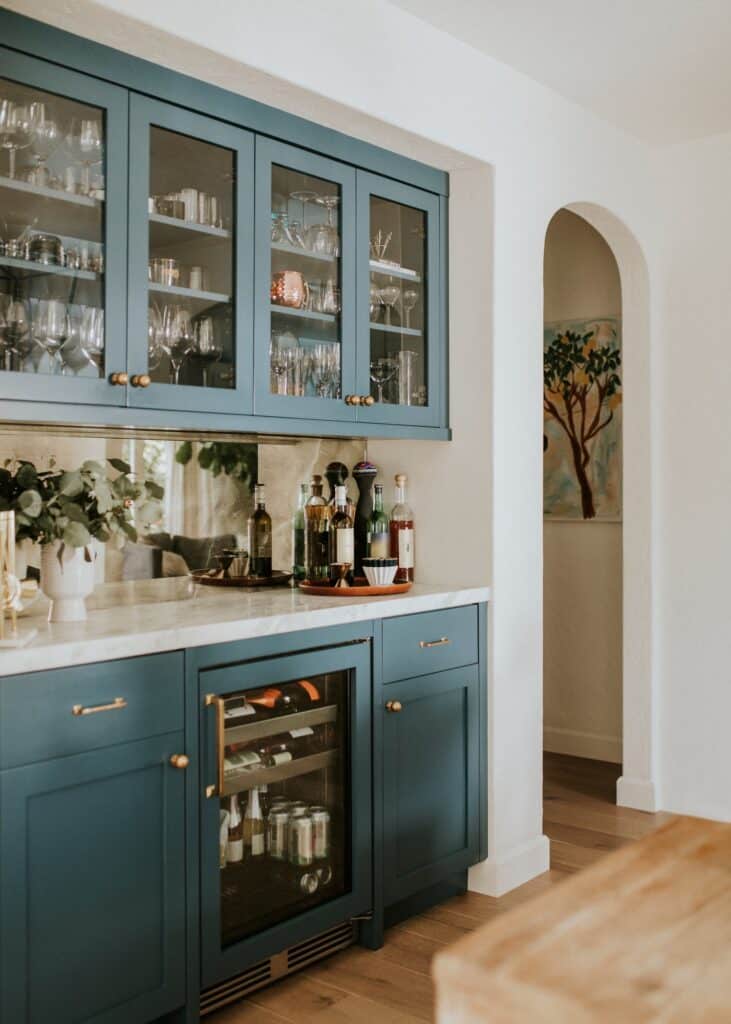
When designing a kitchen, one of the biggest decisions homeowners face is choosing between open shelving and traditional cabinets. Both options offer unique benefits and potential drawbacks, making it essential to weigh style, functionality, and practicality before making a choice.
If you’re considering a kitchen remodel, here’s a detailed look at the pros and cons of open shelving and traditional cabinets to help you decide which best suits your space.
Open Shelving: A Modern and Airy Look
Pros of Open Shelving
1. Enhances Visual Space
Open shelves make a kitchen feel larger and more open by eliminating bulky cabinet doors. This is especially beneficial in smaller kitchens where maximizing space is essential.
2. Easy Access to Everyday Items
With open shelving, frequently used dishes, glasses, and cookware are within arm’s reach, making meal prep and cleanup more convenient.
3. Stylish and Customizable
Open shelves provide an opportunity to showcase stylish dishware, glassware, or decorative kitchen pieces. Homeowners can mix and match materials such as wood, metal, or glass for a customized look.
4. More Affordable than Cabinets
Open shelving is typically more budget-friendly than traditional cabinetry since fewer materials and less labor are required for installation.
5. Encourages Organization
Since everything is on display, open shelving encourages homeowners to keep kitchen items organized and clutter-free.
Cons of Open Shelving
1. Requires Frequent Cleaning
Unlike closed cabinets, open shelves are exposed to dust, grease, and cooking residue, requiring more frequent cleaning and maintenance.
2. Can Look Cluttered
Without careful organization, open shelving can make a kitchen appear messy. Mismatched dishes or excessive items can contribute to visual chaos.
3. Limited Storage Capacity
Traditional cabinets provide enclosed space to store a variety of kitchen essentials, whereas open shelves offer limited storage and are best suited for curated items rather than bulk pantry goods.
4. Not Ideal for Every Kitchen
While open shelving works well in modern, farmhouse, or industrial-style kitchens, it may not blend as seamlessly in traditional or formal kitchen designs.
Traditional Cabinets: Classic and Functional Storage
Pros of Traditional Cabinets
1. Maximizes Storage Space
Traditional cabinets offer significantly more storage, including options for deep drawers, pull-out shelves, and concealed compartments for appliances and pantry items.
2. Keeps Clutter Hidden
Cabinet doors keep dishes, cookware, and miscellaneous kitchen items hidden from view, making it easier to maintain a clean and organized kitchen appearance.
3. Protects Items from Dust and Grease
Unlike open shelves, enclosed cabinets protect kitchenware from dust, grease, and moisture, reducing the need for frequent cleaning.
4. Variety of Styles and Finishes
Cabinets come in a wide range of materials, finishes, and colors, allowing homeowners to customize their kitchen design to match their aesthetic.
5. Increases Home Value
Traditional cabinets are a long-term investment that enhances kitchen functionality and appeal, making them a key selling point for potential buyers.
Cons of Traditional Cabinets
1. Can Feel Heavy and Enclosed
Full cabinetry can make a kitchen feel smaller or more closed off, especially in compact spaces with limited natural light.
2. More Expensive than Open Shelving
Custom cabinets can be costly due to materials, finishes, and labor involved in installation.
3. Harder to Access Everyday Items
Unlike open shelves, cabinets require opening doors and sometimes rummaging through stacked items to find what’s needed.
4. Risk of Outdated Styles
Cabinet designs can become outdated over time, requiring refinishing, repainting, or even replacing to maintain a fresh look.
Which Option is Best for Your Kitchen?
The choice between open shelving and traditional cabinets depends on your kitchen layout, design preferences, and lifestyle.
- If you love a minimalist, modern, or farmhouse look and don’t mind regular upkeep, open shelving might be a great option.
- If you prioritize storage, organization, and low maintenance, traditional cabinets are likely the better choice.
- A hybrid approach—using open shelving for decorative pieces and cabinets for functional storage—can provide the best of both worlds.